Halloween is my favourite time of year. I did this floral arrangement for the season and made a Halloween table topper to go with it. I think the whole thing looks quite cheerful. Also, check out my Halloween door wreath.
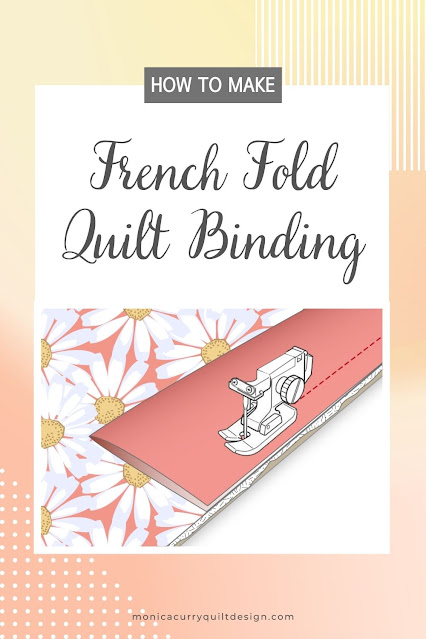
French Fold binding is one of the most popular quilt bindings and for good reason. Because the fabric is doubled, French Fold binding creates a durable edge for your quilt. It's particularly good for quilts and quilted items that are going to get a lot of laundering. It's a very simple binding to make. I use it on all my quilt projects. If you want to add a little flair to your French Fold binding, see my tutorial on French Fold with Flange binding. HOW TO MAKE FRENCH FOLD BINDING 1) DETERMINE THE BINDING LENGTH YOU NEED EXAMPLE : Finished quilt size = 54" × 60" (54" × 2) + (60" × 2) + 10" = 238" (10" extra is added for finishing the binding). (238" ÷ 36") = 6.6 yards You will need 6.6 ≈ 7 yards of binding for a 54" × 60" finished quilt. If making bias binding, cut your fabric strips on the diagonal before making your binding. 2) DETERMINE THE BINDING WIDTH YOU NEED Decide on the binding width you need, then refer t...
This tutorial is for the 17" x 17" Celtic twist block shown above. It may look complicated, but it's simple to put together. There are no Y-seams and no templates to worry about. The block consists of two 6 inch units (one is a snowball block) and two different sized triangle units; that's it! You can make one block or add more units to make a quilt or table runner. I love this block for showcasing big prints. These are the four units to make the block. MATERIALS NEEDED FOR ONE BLOCK (All measurements include a 1/4 inch seam allowance) Unit 1 - Makes 4 [8] 5" x 2" dark print [8] 5" x 2" light print [4] 3½" x 3½" medium print Unit 2 - Makes 4 [1] 7¼" solid Unit 3 - Makes 4 [2] 7" solid [4] 2" x 2" dark print Unit 4 - Makes 1 [1] 6½" x 6½" large print [4] 2" x 2" light print UNIT 1 - Make 4 1. Arrange your fabric pieces to ensure you have the correct colour placement. You'll ne...
Over time, like most quilters, I end up with a lot of spare quilt batting pieces in all kinds of sizes. I don't throw any of these bits and pieces out, however. I keep them in a batting scrap box until I'm ready to recycle them. Here are three ways I recycle batting scraps. I hope this tutorial will encourage you to save your batting scraps and find a use for them. USES FOR BATTING SCRAPS stuffed toys pin cushions zipper bag stabilizer bag straps post cards quilted coasters One of the best ways to reuse batting scraps is to join them to make larger sheets of batting for your quilting projects. Below are two simple ways to do this. ZIG-ZAG STITCH TOGETHER 1. Trim the rough edges of the batting. 2. Butt the trimmed edges together. Do not overlap them. 3. Join the two pieces with a wide zigzag stitch. FUSE TOGETHER I normally zig-zagged my pieces together but in a rush one day, I used a quicker method that I now prefer. I now recycle my batting bits by joining them toget...



Comments
Post a Comment