Posts

Showing posts with the label Quilting Studio

Rescue Your Quilts! Fix & Prevent Fabric Bleed

Image
One of the most disappointing things that can happen to a quilter is fabric bleed. We spend long hours cutting and piecing our precious creation. So, when it comes out of the wash with colours bleeding, it can be devastating. I've been working on a red and white Christmas quilt lately and wanted to prevent this disaster before it happened. These are some of the tip and tricks I gathered for preventing and fixing quilt bleed. PREVENTION Prewash your all your coloured fabrics before cutting them up. I never did this until I started reading about other people's guilt bleed nightmares. When your quilt is finished, wash it alone in cold water.  Add 1 cup of salt to the wash with a mild laundry soap. I use Woolite®   Commercial "colour catchers" sheets are another option. These are laundry sheets you put in your wash load to prevent colour runs. There are  several on the market  you can try. FIXING If there are only a few spots of bleed on white fabric, spray the area...

The more things change . . .

Image
                              . . . the more they stay the same. I bought two irons this month that were manufactured over 100 years apart and was intrigued by how similar they were in design. Both have a double point base, a rounded handle, and need to be placed on a heat source before ironing. The technology for each iron was vastly different, but the concept was the same. I bought the older iron at my favourite antique shop. It's a Mrs. Potts Cold Handle Sad Iron. The "sad" in sad iron is from the Middle English word  sad  which meant solid or heavy.  The second iron was a Panasonic Cordless 360° Freestyle™ Steam/Dry Iron . This iron is so similar to the Sad Iron I suspect the designers at Panasonic really knew their clothes iron history. Who is Mrs. Potts and What is a Sad Iron? Mrs. Potts was born Mary Florence Webber in 1850 in Iowa, US. When she was 17 she married Joseph Potts...

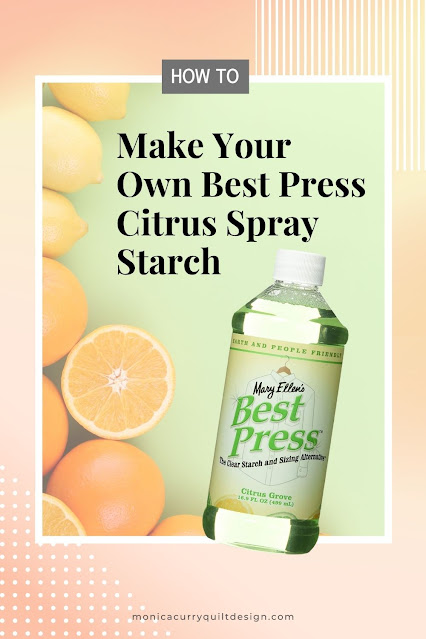
Make Your Own Best Press Citrus Spray Starch

Image
I love Mary Ellen's Best Press Spray . It helps my blocks press crisp and there's no starchy residue. The only downside is that it's way too expensive, especially here in Canada. Also, I don't like the smell of most of their scents; the lavender-scented spray smells like cheap men's cologne. I thought of using the scent-free Best Press, but it costs more than the scented. So, I decided to try making the homemade version of Best Press and I was pleased with the results. I wanted my spray to have a nice scent but most of the recipes I found called for lavender essential oil and I didn't care for it. So, I tried the citrus essential oils (i.e. lemon, lemongrass, bergamot, orange, etc.) and loved the fresh citrusy scent. I use bergamot exclusively now. Bergamot is a fresh, uplifting Italian orange oil used for cosmetics and perfumes. Below is the recipe for the DIY Citrus Best Press that works just as well as the real deal.        DIY CITRUS BEST PRESS (Makes 3 cu...

TOP 10 favourite things in my quilting studio

Image
Like most of you, my studio had humble beginnings but, over time, evolved into a creative sanctuary. As in any good studio, there are special items that keep me inspired, grounded, and working efficiently. In no special order, these are the Top 10 things in my studio I would never part with. 1.  MY ART QUILT ON THE COVER OF  QUILTING ARTS MAGAZINE This framed  Quilting Arts  magazine cover featuring one of my art quilts helps to remind me that hard work and perseverance can pay off and that even though I've created some epic fails, I've also created some beautiful work that others can appreciate. In 2012 my art quilt Mother Ship was selected to be published for the  Quilting Arts  magazine Readers Challenge. I was even more excited when I was told my art was going to be on the front cover of the magazine. The Readers Challenge was to create an art quilt interpreting the phrase "What If." Being a UFO/alien buff, I wondered "What if I saw a UFO over my house...

Quilting room storage: Revamped vintage dresser

Image
This is a great storage idea that I wanted to share. I can't afford much for storage furniture so I normally have to think outside the box to furnish my sewing room. I picked this little mid-century modern dresser at a thrift store. I desperately needed more storage for my batting, backing and those miscellaneous things that needed a home. I forgot to take the before picture but, basically, the original was sprayed in a dark stain and had super ugly drawer handles. After combing over ideas on Pinterest, I came up with this. I really love how it turned out. And I can keep an awful lot of stuff in these drawers. UPDATE: June 2021 Dresser was sold for $150. I paid $40 for the original so I made a $110 profit.😀 I used that $$ to buy IKEA shelving for my studio.

4 Must-Have Irons for Quilting

Image
In a previous post, I showed you how to make your own quilters ironing board . In this post, I’m going to talk about irons for quilting and introduce you to the four irons that I've used over the years with good results. A quilter’s ironing needs are very specific. We might need several types of irons depending on our projects, but there are so many irons on the market it can be mind-boggling choosing the right ones. Three guidelines when buying an iron for quilting: Determine your needs. Do you quilt only occasionally or is your iron going to get a full workout? Do you do patchwork, applique or both? Do your homework. Research different products. Purchase the best iron you can realistically afford. There are many good irons at different price points, so shop around if you're on a strict budget like most of us. 1. Steamfast Mini Steam Iron My  Steamfast Mini Iron  is my little workhorse. It sits beside me on my TV table ironing board when I'm doing all my piecing. It...

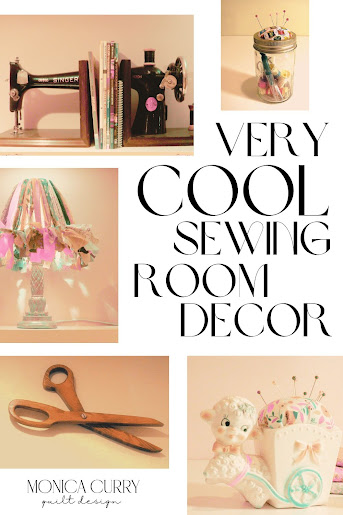
Sewing Machine Bookends: Cool quilting room décor

Image
Last weekend hubby and I took a nice drive in the country to pick up these incredible vintage sewing machine bookends for my sewing room. Aren't these the coolest things you've ever seen? I first saw similar bookends on Pinterest, so I had my eye on these for a while after seeing them on a Facebook group. I was happy the artist, Greg at Prairiepickers.com , still had the bookends when I finally texted him last week to buy them. They cost $100. I thought that was a very good deal considering all the work that went into them. The sewing machine is circa 1920s. Even the wooden bases are from an old sewing machine table. Greg told me he normally upcycles the bases of vintage sewing machines into tables. He said he's usually left with the machine when the table is finished. So, he decided to make something out of a machine because he didn't want to throw it out. The set even came with some vintage wooden spools of thread. I would love to find more of these spools...

DIY Quilter's Ironing Board

Image
HOW TO MAKE A QUILTERS IRONING BOARD I've used a regular ironing board for quilting my whole life. So, when I started seeing these wide ironing boards for quilting, I knew I had to have one. I wish I'd made one of these years ago because it truly makes a difference when ironing quilt tops. If you have an ironing board, you can make one of these quilting boards yourself in a day. SUPPLIES Standard metal ironing board 20" x 55" - 3/8" or 1/2" plywood (No saw? Most hardware stores will cut this for you.) [8] screws [8] washers [1] 26" x 60" cotton duck fabric . [1] 24" x 60" insulated batting. (I used Insul-Brite® by Warm Company ) [2] 24" x 60" 100% cotton quilt batting TOOLS TOOLS Measuring Tape Pencil Screwdriver Handsaw Sandpaper Staple gun and staples shorter than the thickness of your board INSTRUCTIONS 1.  Measure and mark 1½ inches from the corners of the board. (Fig.1). Figure 1 2.  Cut this amount off the corner a h...